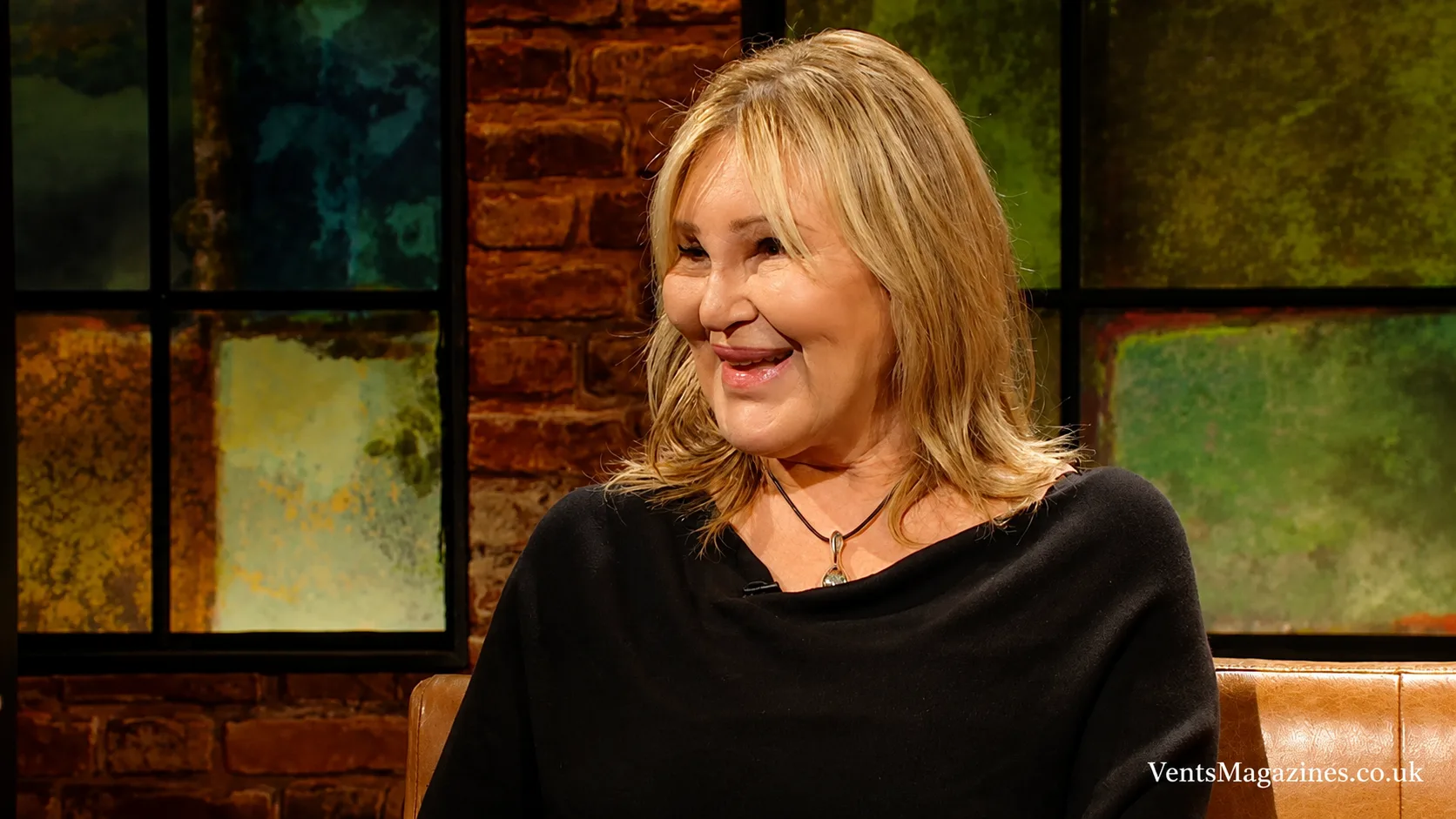
Two facial fillers mixed in a single syringe in 2009 changed carol bryan’s life forever. What began as a routine cosmetic consultation ended in severe facial disfigurement, four years of self-imposed isolation, and a 16-hour surgical procedure that surgeons had never attempted before.
Carol bryan, a former model who started her career at 16, went from a confident public figure to someone who taped her eyelids open just to walk across a room. Her story is one of the most shocking documented cases of cosmetic procedure complications ever shared publicly, and it carries a warning every person considering aesthetic treatment needs to hear.
Carol Bryan Model Career Before the Procedure
Carol bryan built her identity around her appearance from a very young age. She began modelling at 16 and spent years working in the beauty and fashion industry, where her looks opened professional doors and provided her livelihood.
By her 30s, she had a successful husband, a daughter named Sofia, and what appeared from the outside to be a complete life. She had also been using Botox around her eyes to address vertical lines, and by her own account the results were outstanding.
That success with Botox is precisely what led her to take the next step. She felt she was losing facial volume, and a consultation quickly became a persuasion. That persuasion cost her everything.
Also Read: Shani Levni: The Multidisciplinary Artist Redefining Identity and Memory
Carol Bryan Filler Disaster Starts in 2009
In late 2009, carol bryan was encouraged by a cosmetic practitioner to undergo dermal filler injections as a preventative ageing measure. The doctor performing the procedure was not a board-certified plastic surgeon, and the materials used were not FDA-approved.
Two different fillers, one of which was silicone, were combined in the same syringe and injected into her forehead area. Silicone, when used as a facial filler, is permanent and almost impossible to remove once it migrates through the tissue.
Within three months, carol noticed her face beginning to expand and contract. Her forehead started protruding dramatically. She described it as looking like she had the head of an alien, with her forehead so heavy it collapsed over her eyes so she couldn’t see without physically holding it up or taping her eyelids open.
What Happened to Carol Bryan Face After Correction Attempts
The damage did not stop with the initial filler injections. What happened to carol bryan’s face worsened dramatically each time she tried to fix it. Corrective procedures performed over the following years made the disfigurement progressively more severe.
By the time she had exhausted these correction attempts, her face had expanded, collapsed, and distorted beyond recognition. She could no longer go out in public, couldn’t look at herself in mirrors, and began hiding from her own family and friends.
For three and a half years, carol lived in total isolation. She wore scarves, hats, and sunglasses at all times. She contemplated never being seen again. Doctors she approached refused to take her case because the damage from the foreign materials injected into her face was so extreme and the territory so unprecedented.
Timeline of Carol Bryan’s Medical Ordeal
| Year | Event | Outcome |
| 2009 | Dermal fillers injected by non-board-certified practitioner |
Silicone and filler combined; immediate complications began
|
| 2009-2013 | Corrective procedures attempted by other practitioners |
Each correction worsened the facial disfigurement
|
| 2009-2013 | Carol Bryan enters self-imposed isolation |
Recluse for approx. 3.5 years; unable to leave home
|
| 1-4 | First surgery at UCLA with Dr. Reza Jarrahy |
Forehead lift attempted; resulted in blindness in right eye
|
| 2013 | Dr. J. Brian Boyd joins the surgical team |
Parascapular free flap procedure performed
|
| 2013-2016 | Seven reconstructive surgeries total |
Gradual improvement; facial structure partially restored
|
| 2016 | Saving Face initiative launched by Carol Bryan |
Non-profit advocating for aesthetic safety founded
|
| January 2017 | Appeared on The Doctors (CBS) |
First public appearance without sunglasses in six years
|
| 2018 | Featured by American Society of Plastic Surgeons (ASPS) |
Named a Patient of Courage by ASPS
|
Carol Bryan Daughter Sofia Forced a Turning Point
After years of watching her mother disappear behind scarves and silence, Sofia had finally had enough. In 2013, carol bryan’s daughter took decisive action. She contacted teaching hospitals across the entire country, sending photos of her mother’s condition to every major reconstructive centre.
The response was largely silence. The case of carol bryan was so extreme, so unprecedented, that almost every institution refused to take it on. The foreign material injected into her face had caused complications no surgical team had ever dealt with before.
Only one doctor agreed. Dr. Reza Jarrahy, Co-director of the UCLA Craniofacial Clinic, Associate Professor at UCLA, and co-director of the UCLA Face Transplant Program, reached out. He told carol he didn’t yet know exactly how he could help, but he promised to give her a chance to face the world again.
Carol Bryan UCLA Surgery Risks Nobody Had Faced Before
The treatment plan Dr. Jarrahy developed was built in stages, and each step carried enormous unknown risk. The first operation, performed in April 2013, was a forehead lift designed to elevate the collapsed tissue and restore carol bryan’s vision.
However, the diseased tissue that was dislodged during this surgery pressed against her optic nerve, cutting off blood flow. Carol lost her sight permanently in her right eye as a direct result of this first procedure. Despite this devastating complication, she refused to give up.
Dr. Jarrahy then presented her case to a congress of doctors seeking additional expertise. Only one other surgeon stepped forward: Dr. J. Brian Boyd, a Professor of Surgery at the David Geffen School of Medicine at UCLA, Chief of Plastic Surgery at Harbor-UCLA Medical Center, and one of the most accomplished microvascular surgeons in the country with over 25 years of experience.
Carol Bryan 16-Hour Forehead Reconstruction Procedure
The most complex surgery carol underwent was the forehead reconstruction, a procedure that lasted approximately 16 hours and had never been attempted in this exact form before. Dr. Boyd and Dr. Jarrahy removed all diseased muscle and tissue from her forehead down to the bone.
A large section of skin and tissue was then harvested from her back in what is medically called a parascapular free flap. This tissue was re-vascularised and grafted onto her forehead to replace what had been destroyed by the foreign materials. Whether the transplanted tissue would survive was genuinely unknown going into the surgery.
From April 2013 to September 2016, carol bryan underwent a total of seven reconstructive surgeries. Each one carried risks. Each one demanded courage from a woman who had already lost so much. The surgical team at UCLA performed what carol bryan herself described as miracles.
Carol Bryan Surgeries and Procedures Summary
|
Surgery Number
|
Approximate Date | Procedure Type | Key Outcome |
| 1 | April 2013 | Forehead lift for vision restoration |
Lost sight in right eye due to optic nerve ischemia
|
| 2 | 2013 | Parascapular free flap forehead rebuild |
Foreign material removed; back tissue grafted to forehead
|
| 3 | 2014 (est.) | Facelift-type debulking of cheeks |
Facial contours partially improved
|
| 4-7 | 2014-2016 | Multiple revision surgeries |
Progressive restoration of facial structure
|
| Total Duration | April 2013 to September 2016 | Seven operations across approx. 3.5 years |
Partial recovery; permanent blindness in right eye
|
Carol Bryan Now Advocates Aesthetic Medicine Safety
Today, carol bryan is not defined by what happened to her face. She redefined herself through advocacy, public speaking, and the founding of Saving Face, a non-profit organisation she launched in 2016 dedicated to promoting safe and ethical practices in aesthetic medicine.
She identified that no organisation in the United States at the time provided specific support or advocacy for people who had suffered complications from cosmetic procedures. She searched for nearly two years before founding the initiative herself under the umbrella of Face2Face Healing.
As of 2026, carol bryan continues to use her story as a platform to educate the public about the critical importance of verifying a practitioner’s credentials before undergoing any aesthetic procedure. She has spoken on The Late Late Show with Ryan Tubridy, appeared on The Doctors in January 2017, and been featured in Woman’s Health Magazine and by the American Society of Plastic Surgeons.

Carol Bryan Actress Career Connection Explained
Many people searching for carol bryan find references to an actress of the same name listed on IMDb. Carol bryan the actress is known for an appearance in the 1986 television series Boon. This is a separate individual, not the same person as carol the patient advocate and former model.
The confusion arises because both names are identical and both women have a degree of public profile. If you’ve come looking for information about the actress from Boon, the IMDb page for that individual carries the identifier nm1527345.
The carol bryan whose face and story have generated widespread public interest is the Florida-born former model and founder of Saving Face. As of 2026, she lives in Los Angeles, California, with her daughter Sofia.
What Happened to Carol Bryan Face Carries a Clear Lesson
What happened to carol bryan face is not simply a cautionary tale about one bad doctor. It reflects a systemic problem in the cosmetic industry: the widespread availability of injectable treatments administered by practitioners who lack the qualifications, training, or appropriate oversight to perform them safely.
The doctor who injected carol bryan was not a board-certified plastic surgeon. The materials used were not approved by the FDA. The techniques were described by qualified surgeons as aggressive and inappropriate. Yet at the time, nothing prevented this from happening.
Carol has been clear that she doesn’t oppose cosmetic procedures themselves. She underwent Botox with good results. Her position is that patients must research their practitioners with the same rigour they would apply to any significant medical decision.
Dangers of Non-FDA Approved Fillers in Cosmetic Procedures
The specific damage done to carol bryan’s face was driven by the use of silicone combined with another filler in a single injection. Permanent silicone, when used as a facial filler, does not break down. If the body reacts badly or the material migrates, it is extraordinarily difficult to remove without destroying the surrounding tissue.
Board-certified plastic surgeon Dr. Andrew Ordon, who discussed her case on The Doctors in 2017, explained that silicone’s permanence is precisely what makes it so dangerous when misapplied. Patients are often told silicone is better because it lasts forever. That permanence becomes a trap the moment anything goes wrong.
The American Society of Plastic Surgeons noted in 2015 that injectable fillers were the fastest-growing minimally invasive cosmetic procedure in the country. That growth rate makes it more important than ever for patients to understand not just what is being injected, but who is qualified to inject it and under what conditions.
How to Choose a Safe Cosmetic Practitioner in 2026
Carol bryan’s experience offers the clearest possible argument for doing your due diligence before any cosmetic procedure. You need to verify board certification independently. A claim of “cosmetic doctor” or “aesthetic specialist” carries no legal weight in many jurisdictions and does not guarantee appropriate medical training.
You should ask explicitly what materials will be used, confirm they are FDA-approved for the specific application, and verify that your practitioner carries appropriate medical liability insurance. Any reluctance to answer these questions clearly is a signal to walk away.
Carol has said publicly that if a single person avoids the suffering she went through because of her story, then what she went through was not entirely in vain. In 2026, that message carries as much urgency as it did in 2013 when she first found the courage to seek help.
Conclusion
Carol bryan’s story is one of the most compelling and sobering accounts of cosmetic procedure complications ever documented publicly. From a Florida model who started her career at 16, she became a recluse for three and a half years, underwent seven major reconstructive surgeries, and permanently lost sight in her right eye, all as a consequence of a single persuasive consultation in 2009.
The team at UCLA, led by Dr. Reza Jarrahy and Dr. J. Brian Boyd, gave her back the ability to face the world. She chose to use that second chance not for herself alone but for every person who might make the same mistake she did. If you are considering any cosmetic injectable treatment in 2026, the single most important step you can take is to verify your practitioner’s credentials before you agree to anything.
Frequently Asked Questions
What happened to Carol Bryan’s face?
Carol bryan’s face was severely disfigured after a non-board-certified doctor injected two types of facial filler, including silicone, into her forehead in 2009. Her forehead expanded and collapsed, covering her eyes. Each corrective attempt made things worse, leaving her disfigured and forcing her into isolation for over three years.
Who is Carol Bryan actress?
Carol bryan the actress is a separate individual from carol bryan the patient advocate and former model. The actress is known for the 1986 British television series Boon and is listed on IMDb under the identifier nm1527345. The two women share a name but are not the same person and have entirely different public profiles.
What fillers were injected into Carol Bryan’s face?
Two different fillers were combined in a single syringe and injected into carol bryan’s forehead in 2009. One of the fillers was silicone, which is permanent and difficult to remove once it migrates. Neither material was FDA-approved for the use performed, and the practitioner was not a board-certified plastic surgeon.
How many surgeries did Carol Bryan have?
Carol bryan underwent a total of seven reconstructive surgeries between April 2013 and September 2016 at UCLA. These were performed by Dr. Reza Jarrahy and Dr. J. Brian Boyd. The surgeries ranged from an initial forehead lift to a complex 16-hour procedure that grafted tissue from her back onto her forehead.
Did Carol Bryan go blind?
Yes. During the first surgery in April 2013, dislodged diseased tissue pressed against carol bryan’s optic nerve, cutting off blood flow and causing irreversible blindness in her right eye. Despite this devastating outcome, she continued with further reconstructive procedures and credits her surgical team for restoring her ability to function publicly.
Who treated Carol Bryan after her botched procedure?
Carol bryan was treated primarily by Dr. Reza Jarrahy, Co-director of the UCLA Craniofacial Clinic, and Dr. J. Brian Boyd, Chief of Plastic Surgery at Harbor-UCLA Medical Center and a Professor at the David Geffen School of Medicine at UCLA. Dr. Boyd performed the complex forehead reconstruction using a parascapular free flap.
What is the Saving Face initiative?
Saving Face is a non-profit organisation founded by carol bryan in 2016. It operates under Face2Face Healing and advocates for safe and ethical practices in aesthetic medicine. It also provides support for individuals who have suffered complications and disfigurement from cosmetic procedures, and educates the public on choosing qualified practitioners.
Where is Carol Bryan now?
As of 2026, carol bryan lives in Los Angeles, California with her daughter Sofia. She continues to work as a public speaker and patient advocate, sharing her experience to warn others about the dangers of unqualified cosmetic practitioners. She founded Saving Face in 2016 and remains active in the aesthetic safety advocacy space.
What doctor performed Carol Bryan’s forehead reconstruction?
Dr. J. Brian Boyd, a board-certified microvascular surgeon with over 25 years of experience, performed carol bryan’s forehead reconstruction. He holds a position as Professor of Surgery at the David Geffen School of Medicine at UCLA and served as Chief of Plastic Surgery at Harbor-UCLA Medical Center. He joined the case after Dr. Reza Jarrahy presented it to a congress of surgeons.
How long did Carol Bryan live in isolation?
Carol bryan lived in isolation for approximately three and a half years between 2009 and 2013. During this period she did not leave her home, avoided mirrors, wore hats, scarves, and sunglasses constantly, and hid her condition from friends and family. Her daughter Sofia finally persuaded her to seek medical help in 2013.
What TV shows featured Carol Bryan’s story?
Carol bryan’s story has been featured on The Doctors, a CBS daytime show where she appeared in January 2017 for her first public outing without sunglasses in six years. She also appeared on The Late Late Show with host Ryan Tubridy on RTE. Her story was additionally covered in Woman’s Health Magazine and by the American Society of Plastic Surgeons in 2018.
What warning does Carol Bryan give about cosmetic procedures?
Carol bryan urges everyone considering any aesthetic procedure to verify independently that their practitioner is board-certified, confirm that all materials being injected are FDA-approved, and never proceed based on persuasion alone. She stresses that cosmetic procedures are not inherently dangerous but become dangerous when performed by unqualified individuals using inappropriate materials.