

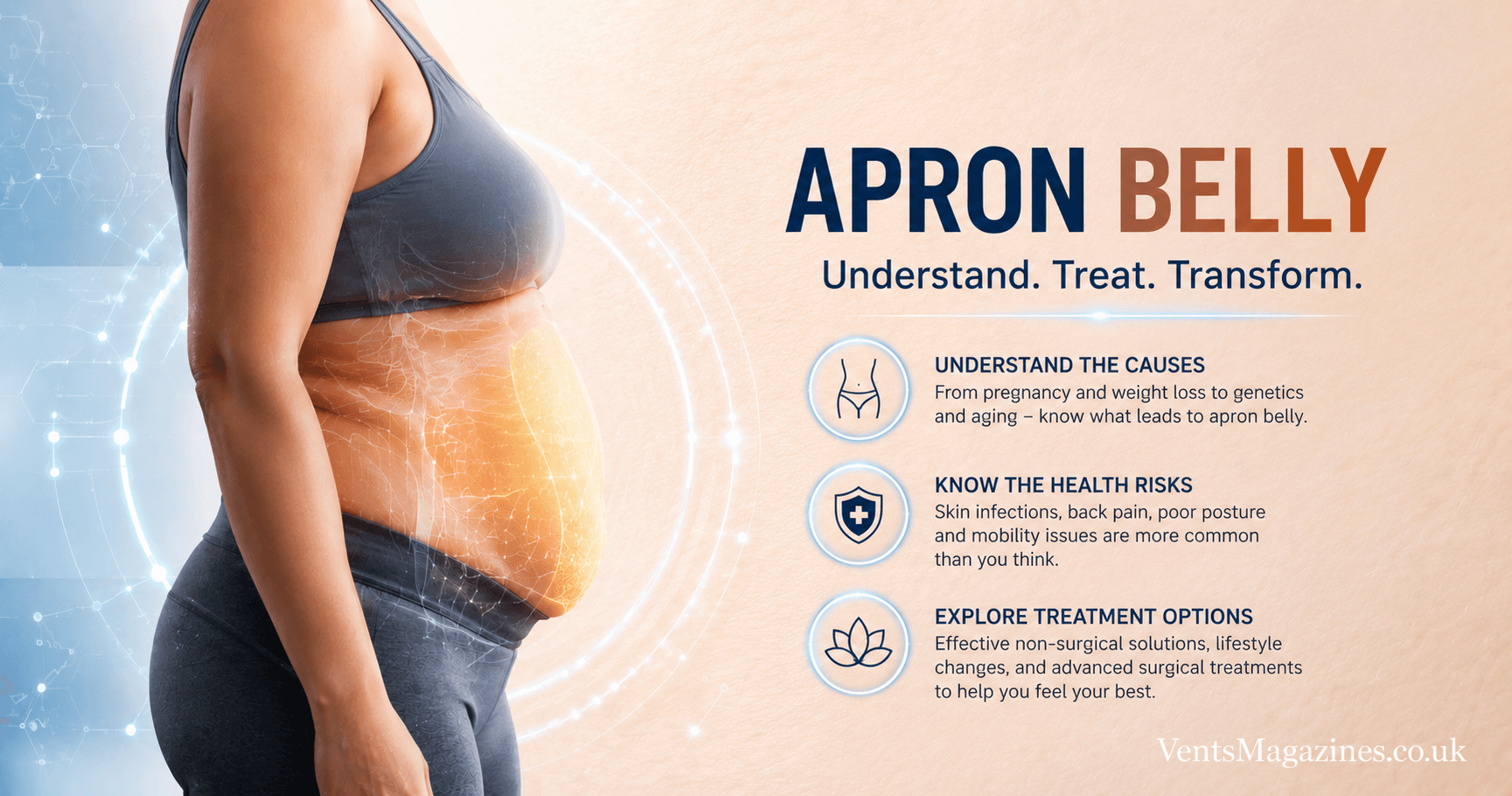
Apron belly affects millions of people worldwide, yet it remains one of the most misunderstood body changes a person can experience. Also called a pannus stomach, stomach overhang, or mother’s apron, an apron belly forms when excess skin and fat accumulate in the lower abdomen and hang down over the waistline. It isn’t simply a cosmetic concern. Left unmanaged, it can cause chronic skin infections, back pain, and serious limitations to daily movement.
Whether yours developed after pregnancy, significant weight loss, bariatric surgery, or gradual weight gain over the years, understanding what it is and what actually works is the first step. This guide covers every cause, every treatment option, and the honest truth about what diet, exercise, and surgery can and cannot achieve.
Apron Belly at a Glance: Fast Facts
| Field | Details |
| Other Names |
Pannus stomach, pannus abdomen, mother’s apron, stomach overhang, abdominal apron
|
| Main Causes |
Pregnancy, significant weight loss, obesity, bariatric surgery, ageing, genetics
|
| Who Is Affected |
Men and women of all ages; most common after pregnancy or major weight loss
|
| Key Health Risks |
Skin infections (intertrigo, fungal), rashes, back pain, poor posture, hygiene difficulties
|
| Non-Surgical Treatments |
Diet, exercise, anti-chafing creams, compression garments, CoolSculpting, radiofrequency
|
| Surgical Options |
Panniculectomy (apronectomy), full abdominoplasty, mini-abdominoplasty, combined liposuction
|
| NHS Coverage (UK) |
Possible if functional symptoms are documented; purely cosmetic cases are not covered
|
| Private Surgery Cost (UK) |
Approx. £4,000–£9,000 depending on procedure and clinic (est. 2026)
|
| Recovery Time |
4–6 weeks for panniculectomy; 6–12 weeks for full abdominoplasty
|
What Is an Apron Belly and Why Does It Form
An apron belly forms when the lower abdominal skin and fat stretch beyond the point of natural recovery. When you gain significant weight, the skin expands to accommodate additional tissue. If that weight is then lost, or if pregnancy stretches the skin over months and then rapidly deflates, the skin elasticity can’t always bounce back. The result is a fold of skin and fat that hangs over the pubic area, sometimes reaching as low as the thighs or knees.
Medically, the overhanging tissue is called the pannus or panniculus. It sits below the waistline and in front of the intestines, over the omentum, which is a fatty membrane connected to the abdominal organs. The size varies considerably from person to person. A minor overhang may sit just above the pubic hairline, while a more pronounced apron belly can fall to the knees in severe cases.
It’s worth knowing that two people with the same weight history won’t necessarily have the same result. Genetics, skin quality, age, and the speed of weight change all influence how much excess skin remains. This is why two women who’ve had identical pregnancies can have very different abdominal outcomes, and why one person’s pannus responds to lifestyle changes while another’s doesn’t budge at all.

Also Read: Complete Guide to BrassSmile: Smile Makeovers, Treatments, Benefits & Costs
Apron Belly Causes Beyond Pregnancy and Weight Gain
Most people assume an apron belly is a post-pregnancy issue, and pregnancy is certainly a significant trigger. During pregnancy, the abdominal wall stretches to accommodate a growing baby over nine months. After delivery, the skin doesn’t always contract back to its previous state, particularly after multiple pregnancies or when diastasis recti (the separation of the abdominal muscles) is present.
However, pregnancy is far from the only cause. Significant weight loss is equally responsible, especially after bariatric surgery such as gastric bypass or sleeve gastrectomy. Rapid or large-scale weight loss removes the fat underneath the skin faster than the skin can tighten, leaving behind an apron belly even in people who have achieved a healthy weight. This is one of the most common presentations seen by plastic surgeons across the UK.
Other contributing causes include hormonal changes during menopause, which redistribute fat to the lower abdomen while reducing skin elasticity. Genetic predisposition plays a role too: some people store fat in the lower abdominal region regardless of overall body weight. Age-related collagen loss makes the skin progressively less capable of retraction. And in some cases, abdominal hernias or structural issues contribute to the appearance of an overhang.
Apron Belly Health Risks Skin Infections Back Pain Mobility
An apron belly is not just a body image concern. Without proper management, it creates a set of real, measurable health risks that affect daily life significantly. The most common problem is intertrigo, a skin rash that develops in the moist fold beneath the pannus. Trapped heat and friction create ideal conditions for fungal infections such as tinea and bacterial infections. Chronic sufferers deal with persistent redness, soreness, and odour that seriously affects quality of life.
Back pain is another documented consequence. A heavy pannus pulls the body’s centre of gravity forward, placing sustained strain on the lumbar spine. Over time, this contributes to poor posture, muscle imbalances, and chronic lower back discomfort. Some people unconsciously lean backwards to compensate, which creates secondary tension across the hips and shoulders.
Mobility limitations are also real. A large apron belly can interfere with walking, standing for extended periods, bending, and even personal hygiene. Everyday tasks like getting dressed become physically challenging. Research published in StatPearls via the NCBI confirms that a substantially large panniculus leads to severe impacts on patients’ mobility and activities of daily life. These functional difficulties, not cosmetic concerns, are often the basis on which NHS treatment may be considered.
Apron Belly Health Risks and How They Present
| Health Risk | How It Presents | Who Is Most Affected |
| Intertrigo (skin rash) | Redness, soreness, itching in the skin fold under the pannus |
Anyone with a large pannus, especially in warm climates
|
| Fungal infections | Tinea, candida rash, persistent odour, white discharge in skin folds |
People with diabetes or compromised immune function
|
| Bacterial infections | Open sores, weeping skin, localised swelling and heat |
Severe pannus cases with restricted hygiene access
|
| Back pain | Chronic lumbar strain, postural imbalance, hip tension |
Those with a heavy or large-hanging apron belly
|
| Poor posture | Forward lean, hunched shoulders, altered gait |
Long-term pannus carriers; post-bariatric surgery patients
|
| Mobility restriction | Difficulty walking, bending, exercising, or sitting comfortably |
Larger pannus grade 3–5; post-weight-loss patients
|
| Hygiene difficulties | Inability to clean under the fold properly; recurring infections | Any grade of pannus; worsens with size |
| Psychological impact | Body image distress, social avoidance, reduced confidence |
Women post-pregnancy; post-bariatric surgery patients
|
Apron Belly vs Visceral Fat Knowing the Real Difference
One of the most important distinctions to understand is the difference between an apron belly and visceral fat. They’re not the same thing, and confusing them leads to wasted effort and unrealistic expectations. Visceral fat sits deep inside the abdominal cavity, surrounding the internal organs. You can’t feel or see it directly, but it drives metabolic health risks including type 2 diabetes, cardiovascular disease, and inflammation.
An apron belly, by contrast, is primarily a structural problem involving the skin and subcutaneous fat layer. A surgeon can distinguish the two with a simple physical assessment. If you can pinch and lift the fold, it’s predominantly subcutaneous. If the belly remains round and firm even when lying down and the skin isn’t really loose, visceral fat is the main issue. Many people have both, which is why outcomes from the same treatment can vary so significantly.
This distinction matters enormously when you’re planning what to do. Diet and exercise are effective at reducing visceral fat. However, they cannot retract skin that has already lost its elasticity. That’s a structural limitation of biology, not a failure of effort. If your apron belly is primarily excess skin after weight loss, no amount of cardio will remove it. Understanding this early saves months of frustration.
Diet and Exercise for Apron Belly What Actually Works
If your apron belly is driven by excess fat rather than excess skin, diet and exercise can make a genuine difference. A caloric deficit achieved through eating nutritious whole foods, reducing processed sugars, increasing lean protein and fibre, and staying well hydrated will reduce subcutaneous fat across the body over time. There’s no such thing as spot reduction, but consistent overall fat loss will gradually reduce the size of the pannus if fat is a significant component.
Exercise is most effective when it’s varied and whole-body in approach. Cardio workouts such as walking, cycling, and swimming burn calories and support cardiovascular health. Strength training builds muscle, increases your resting metabolic rate, and improves overall body composition. However, sit-ups and crunches alone won’t solve an apron belly. They strengthen the muscles beneath the skin but don’t address the skin or fat tissue sitting on top.
If your apron belly is primarily excess skin after major weight loss, it’s important to be honest with yourself: diet and exercise won’t remove it. The skin has already lost its collagen structure and elasticity. You can absolutely improve your overall health and fitness, which makes you a better surgical candidate if you eventually choose that route. But for true excess skin removal, a clinical procedure is the only effective option.
Managing Apron Belly Discomfort Day to Day Practical Relief
While you’re working toward longer-term solutions, managing daily discomfort from an apron belly is genuinely important. The skin under the fold is vulnerable to chafing, moisture buildup, and rashes. Simple daily habits can reduce the risk of skin infections significantly and improve your overall comfort level.
Keeping the skin fold clean and thoroughly dry after bathing is the single most effective preventive step. Use a soft cloth or a hairdryer on a cool setting to dry underneath the fold. Apply an anti-chafing cream, zinc oxide paste, or a barrier cream such as Sudocrem to reduce friction. Many people find that cotton clothing or moisture-wicking fabrics reduce heat buildup in the area. Some use medical-grade folded gauze or a pannus sling to lift the fold and allow airflow.
If you’re developing recurrent rashes or infections, speak to your GP. A fungal infection under the apron belly fold may require antifungal cream or oral medication. Persistent bacterial skin infections may need antibiotics. Don’t attempt to self-manage recurrent or severe infections, as they can escalate quickly, particularly in people with diabetes or compromised immune function.
Non-Surgical Apron Belly Treatments CoolSculpting Radiofrequency
Non-surgical treatments are frequently marketed to people with an apron belly, and it’s important to understand what they can and cannot do. CoolSculpting (cryolipolysis) and radiofrequency treatments can reduce localised fat deposits and offer mild skin tightening in patients with good skin elasticity. In the right candidate, they can enhance the appearance of a minor overhang, particularly when fat rather than skin is the primary issue.
However, if you already have a significant, established apron belly with marked skin folds, non-surgical procedures won’t lift or remove the excess skin. As Dr Djian, a Paris-based plastic surgeon, noted in his 2026 clinical article, radiofrequency and cryolipolysis have no effect on excess skin or muscle slackening. Their role is complementary, best used alongside weight loss or as a post-surgical optimisation tool, not as a standalone fix for a mature pannus.
Non-surgical options are also not appropriate for everyone. If you’re breastfeeding or have obesity as classified by a clinician, these treatments aren’t suitable. As of 2026 in the UK, a standard CoolSculpting session targeting the abdominal area costs approximately £600 to £1,500 per session, and multiple sessions are typically required. Results vary considerably between individuals and are not guaranteed.
Panniculectomy and Abdominoplasty Surgical Options for Apron Belly
Surgery is the only method proven to physically remove an apron belly caused by excess skin. There are three main surgical procedures, and choosing between them depends on the extent of the overhang, the presence of diastasis recti, the patient’s overall health, and their aesthetic goals.
Panniculectomy (Apronectomy)
A panniculectomy, sometimes called an apronectomy, removes the overhanging pannus without tightening the abdominal muscles. It’s primarily a functional surgery designed to resolve the health consequences of the apron belly: rashes, infections, hygiene issues, and mobility problems. The surgeon makes a low horizontal incision across the lower abdomen, removes the excess skin and fat, and closes the wound. Unlike a full abdominoplasty, it does not reposition the belly button or correct muscle separation. Because it’s reconstructive rather than cosmetic, it may be partially covered by the NHS or private health insurance if functional symptoms are documented. Recovery is typically 4 to 6 weeks.
Full Abdominoplasty (Tummy Tuck)
A full abdominoplasty goes further than a panniculectomy. It removes excess skin and fat from the entire abdomen, tightens the rectus abdominis muscles if diastasis is present, repositions the belly button, and creates a flatter, firmer abdominal contour. It’s the most comprehensive solution for an apron belly combined with muscle laxity, and delivers more significant aesthetic results. General anaesthesia is required, hospital stay is typically 1 to 2 nights, and recovery runs 6 to 12 weeks. As of 2026 in the UK, the private cost ranges from approximately £6,000 to £9,000.
Mini-Abdominoplasty
A mini-abdominoplasty is appropriate when the apron belly is limited to the lower abdomen below the navel, without significant muscle separation above it. The scar is shorter, positioned low in the pubic area similar to a caesarean scar, and the belly button is not repositioned. It’s a less invasive procedure with a slightly shorter recovery than a full abdominoplasty, and is better suited to patients with moderate rather than extensive skin excess. Combining it with liposuction can enhance results in patients who have a mixed skin-and-fat presentation.
Surgical Options for Apron Belly Compared
| Procedure | What It Corrects | Muscle Repair | Navel Reposition | Approx. UK Cost 2026 | NHS Coverage Possible | Recovery |
| Panniculectomy | Excess pannus skin and fat | No | No | £4,000–£6,000 | Yes (functional cases) | 4–6 weeks |
| Mini-Abdominoplasty | Lower abdominal skin excess only | Partial | No | £4,500–£7,000 | Rarely | 4–6 weeks |
| Full Abdominoplasty | Full abdominal skin, fat, muscles | Yes | Yes | £6,000–£9,000 | No (usually cosmetic) | 6–12 weeks |
| Liposuction alone | Fat only, not skin | No | No | £2,500–£5,000 | No | 2–4 weeks |
| Liposuction + Mini-Plasty | Fat and lower skin excess | Partial | No | £5,500–£8,000 | Rarely | 5–7 weeks |
Apron Belly NHS Coverage UK and Private Surgery Costs
One of the most common questions people ask is whether the NHS will fund treatment for an apron belly. The answer depends entirely on the nature and severity of the symptoms. The NHS does not fund surgery for purely cosmetic reasons. However, if your pannus is causing documented functional impairment, including persistent skin infections, rashes that don’t respond to treatment, hygiene difficulties, or mobility problems, a referral to a plastic surgery team for a panniculectomy may be considered.
To pursue NHS funding, you’ll typically need a referral from your GP supported by documented medical evidence: records of recurrent skin infections, dermatology referrals, photos, and a body mass index within a clinically acceptable range. Many NHS trusts also require your weight to have been stable for a minimum of 6 months and, if you’ve had bariatric surgery, at least 18 months to have passed since the operation.
Private surgery costs in the UK vary by procedure and clinic. As of 2026, a standard panniculectomy costs approximately £4,000 to £6,000 at a reputable private clinic. A full abdominoplasty ranges from £6,000 to £9,000. These figures typically include anaesthesia, theatre fees, post-operative garments, and follow-up appointments, but always request a detailed written quote before committing. Some clinics offer finance plans to spread costs over time.
Diastasis Recti Apron Belly and the Abdominal Wall Connection
Many people with an apron belly, particularly those who’ve been pregnant or experienced significant weight fluctuations, also have diastasis recti: a separation of the two rectus abdominis muscles that run down the front of the abdomen. When the connective tissue between these muscles, called the linea alba, is stretched and weakened, the abdominal wall loses structural support. The belly can dome or bulge outward, making the apron belly more pronounced.
Diastasis recti is extremely common after pregnancy, estimated to affect over 60 percent of women in the third trimester, with many still experiencing significant separation at six months postpartum. It can also occur in men following extreme weight gain. Standard abdominal exercises, particularly crunches and sit-ups, can actually worsen the condition if performed incorrectly, increasing intra-abdominal pressure on an already compromised wall.
If diastasis recti is contributing to your apron belly, this changes the treatment picture. Diet and exercise alone won’t correct muscle separation. A full abdominoplasty with muscle plication, in which the surgeon sutures the rectus muscles back together, is the definitive treatment. Some physiotherapists also offer diastasis rehabilitation programmes that can improve functional strength, though they don’t physically close a severe separation.
Apron Belly After Weight Loss Bariatric Surgery and Skin Excess
Losing large amounts of weight is a genuine achievement, but it often leaves a challenging consequence: significant excess skin that diet and exercise can’t resolve. This is particularly pronounced after bariatric surgery such as gastric bypass or sleeve gastrectomy, where weight loss happens rapidly over months. The skin, which expanded gradually over years, doesn’t have the biological capacity to contract at the same speed.
The resulting apron belly after weight loss surgery tends to be more significant than post-pregnancy cases because the total skin excess is usually greater. It’s also more likely to cause functional problems: the excess skin is heavier, creates more friction, and is more prone to infection. UK surgeons operating in this area recommend waiting at least 18 months after bariatric surgery before considering a panniculectomy or abdominoplasty to ensure weight has stabilised and surgical risk is minimised.
Research confirms that patients who wait until their weight is stable experience significantly fewer post-operative complications. If you’re at this stage, ask your GP for a referral to an NHS plastic surgery team first. Many post-bariatric patients in the UK qualify for a panniculectomy under reconstructive surgery criteria. Document every symptom carefully: photos, GP visit records, and any dermatology or infection treatment you’ve received all strengthen your case for NHS funding.
Apron Belly Grades How Surgeons Classify Pannus Size
Surgeons and clinicians use a grading system to describe the extent of an apron belly. Understanding this classification helps you communicate clearly with healthcare providers and understand why treatment recommendations differ between individuals. The system is commonly referred to as the Pannus Classification or Matarasso grading scale.
| Grade | How Far Pannus Hangs | Typical Presentation | Common Treatment |
| Grade 1 | Just below the pubic hairline | Mild overhang, cosmetic concern mainly |
Diet, exercise, anti-chafing cream
|
| Grade 2 | Covers pubic area | Moderate fold, some hygiene difficulty |
Lifestyle changes; may consider surgery
|
| Grade 3 | Covers upper thigh | Persistent rashes, hygiene problems |
Non-surgical aids; surgical referral common
|
| Grade 4 | Extends to mid-thigh | Mobility affected, recurrent infections |
Panniculectomy often indicated
|
| Grade 5 | Reaches knees or beyond | Severe functional impairment |
Full panniculectomy; NHS criteria often met
|
Mental Health Body Image and Apron Belly Emotional Impact
The emotional weight of living with an apron belly is real and shouldn’t be minimised. Many people experience genuine body image distress, social avoidance, and reduced confidence. Covering the area, avoiding swimming pools or intimate situations, and declining physical activities because of self-consciousness are all common responses. For some, the impact on mental health is more significant than the physical symptoms.
It’s equally important to set realistic expectations around surgery. A panniculectomy or abdominoplasty improves the physical shape of the abdomen and resolves functional symptoms. But as Dr Djian’s 2026 clinical review notes, psychological improvement isn’t automatic or immediate. The body changes faster than the way a person perceives themselves. If body dysmorphic disorder or deeply rooted self-image issues are present, surgery alone won’t resolve them, and a psychological assessment is often recommended before operating.
This doesn’t mean surgery is the wrong choice. For the right patient, removing an apron belly delivers a measurable improvement in quality of life, comfort, mobility, and confidence. The goal is simply to go in with clear expectations and, where possible, to combine physical treatment with appropriate emotional support.
Apron Belly in Men Causes Differences and Treatment Options
An apron belly in men is less commonly discussed but far from rare. Men can develop a pannus following significant weight gain, bariatric surgery, or gradual weight gain over decades, particularly around the lower abdominal region. The clinical presentation is similar to that seen in women, but there are anatomical differences that affect treatment.
Male skin tends to be thicker and less elastic than female skin, meaning excess skin after weight loss can be more pronounced. Visceral fat also tends to be more dominant in men, sitting inside the abdominal cavity rather than subcutaneously. This means the apron belly in a man may have a larger fat component relative to skin, making it more responsive to sustained weight loss compared to a predominantly skin-driven pannus in a post-partum woman.
Surgically, men undergo the same procedures: panniculectomy, abdominoplasty, or combined liposuction with skin excision. The scar is positioned low in the pubic area to remain concealed. Some men with a sports-focused physique goal opt for abdominal etching in conjunction with liposuction for a more contoured result. As of 2026, NHS funding criteria for men with an apron belly are identical to those for women: functional impairment must be documented.
When to See a Doctor About Your Apron Belly
You don’t need to wait until things become severe before speaking to your GP about an apron belly. If you’re experiencing any skin infections, persistent rashes, pain, hygiene difficulties, or mobility limitations related to your pannus, a GP visit is the right first step. They can assess functional impairment and refer you for specialist advice if appropriate.
If your apron belly is primarily a cosmetic concern at this stage, a GP can still advise on healthy weight loss programmes, refer you to a dietitian, or point you toward NHS weight management services. For surgical options, you’ll need a referral to a plastic surgery team regardless of whether you’re pursuing NHS or private treatment.
Do seek urgent medical attention if the skin under your apron belly is showing signs of spreading infection: increasing redness, warmth, swelling, pain, or discharge. Cellulitis and severe intertrigo can escalate quickly and may require hospital treatment, particularly in people with diabetes or other conditions that impair healing.
Conclusion
An apron belly is a medical and physical reality for millions of people, not a reflection of effort or willpower. Understanding what it actually is, whether it’s driven by fat, excess skin, or both, is the foundation for choosing the right approach. Diet and exercise deliver genuine results when fat is the dominant factor, but no lifestyle change removes skin that has lost its structural elasticity after pregnancy, bariatric surgery, or major weight loss.
Non-surgical treatments have a limited but real role for mild cases or as complementary tools. Surgery, whether a panniculectomy, mini-abdominoplasty, or full abdominoplasty, remains the only proven method for removing excess skin and resolving the functional health consequences of a significant apron belly. If you’re in the UK, start with your GP. Document every symptom, explore NHS referral pathways, and seek a consultation with a qualified plastic surgeon to understand your specific options.
Your next step is a conversation with your GP, armed with a clear account of your symptoms, their duration, and the impact they have on your daily life. That conversation is where the right path forward begins.
Frequently Asked Questions
Can you get rid of an apron belly without surgery?
If your apron belly is primarily fat, sustained weight loss through diet and exercise can reduce it. However, if excess skin is the main issue, no non-surgical treatment removes it permanently. Non-invasive procedures like CoolSculpting can reduce fat but don’t tighten significantly stretched skin. Surgery remains the only definitive solution for established skin excess.
What causes an apron belly?
An apron belly is caused by skin losing its elasticity after being stretched. Common causes include pregnancy, significant weight gain followed by weight loss, bariatric surgery, ageing, hormonal changes during menopause, and genetics. Not everyone who gains or loses weight develops one, as skin quality and genetics strongly influence the outcome.
Is an apron belly dangerous to health?
An apron belly can cause genuine health problems. Persistent skin infections, fungal rashes, back pain, poor posture, and mobility limitations are all documented consequences. In people with diabetes or weakened immune systems, skin infections under the pannus can become serious. These functional risks, not just appearance, are why surgical treatment is sometimes medically justified.
Will losing weight get rid of an apron belly?
Weight loss can reduce the fat component of an apron belly, making it smaller and less heavy. However, if the skin has already stretched and lost elasticity, it won’t retract simply because the fat underneath reduces. Many people who lose significant weight are left with an apron of loose skin that requires surgical removal to resolve fully.
What is a panniculectomy and how does it differ from a tummy tuck?
A panniculectomy removes the overhanging pannus, which is excess skin and fat, without tightening the abdominal muscles or repositioning the belly button. It’s primarily functional surgery. A tummy tuck, or abdominoplasty, removes skin and fat and also tightens the abdominal muscles, repositions the navel, and delivers a more sculpted result. Panniculectomy may qualify for NHS or insurance coverage; abdominoplasty usually does not.
Does the NHS cover apron belly surgery?
The NHS may fund a panniculectomy if your apron belly causes documented functional problems such as recurrent skin infections, hygiene difficulties, rashes unresponsive to treatment, or mobility limitations. Purely cosmetic cases are not covered. Your GP must refer you, and you typically need to show stable weight, documented symptoms, and a BMI within the range your trust specifies.
How long does it take to recover from apron belly surgery?
Recovery from a panniculectomy typically takes 4 to 6 weeks before returning to light activities. A full abdominoplasty takes 6 to 12 weeks for most people to feel fully recovered, with swelling continuing to reduce for up to 12 months. You’ll need to wear a compression garment for several weeks, avoid strenuous activity, and attend follow-up appointments as directed by your surgical team.
Can exercise reduce an apron belly?
Exercise reduces fat across the body, which can make an apron belly smaller if fat is a significant component. Core exercises improve posture and muscle tone beneath the skin. However, no exercise removes excess skin that has lost elasticity. If your apron belly is primarily a skin issue following pregnancy or major weight loss, exercise will improve your fitness but won’t eliminate the overhang.
What is diastasis recti and how does it relate to apron belly?
Diastasis recti is a separation of the abdominal muscles that commonly occurs during pregnancy or after significant weight gain. It weakens the abdominal wall, causing the belly to bulge or dome outward, which can worsen the appearance of an apron belly. Standard crunches can aggravate diastasis. A full abdominoplasty with muscle repair is the definitive surgical treatment when both conditions are present simultaneously.
What are the grades of apron belly severity?
Surgeons grade an apron belly from grade 1 to grade 5 based on how far the pannus hangs. Grade 1 sits just below the pubic hairline. Grade 5 reaches the knees or beyond. Higher grades cause more functional impairment, are more likely to generate skin infections and mobility issues, and are more likely to qualify for NHS funding for a panniculectomy based on clinical criteria.
How much does apron belly surgery cost in the UK?
As of 2026 in the UK, a panniculectomy at a private clinic costs approximately £4,000 to £6,000. A full abdominoplasty ranges from £6,000 to £9,000. A mini-abdominoplasty typically falls between £4,500 and £7,000. These estimates include theatre fees and standard follow-up but can vary by surgeon experience and clinic location. Always request a full written quote before proceeding.
Can men get an apron belly?
Yes. Men develop an apron belly after significant weight gain, obesity, or following bariatric surgery. Male skin tends to be thicker, and visceral fat often plays a larger role than in women. The surgical options are the same, and NHS coverage criteria are identical. Some men combine liposuction with panniculectomy or choose abdominal etching for a more athletic postoperative result.