
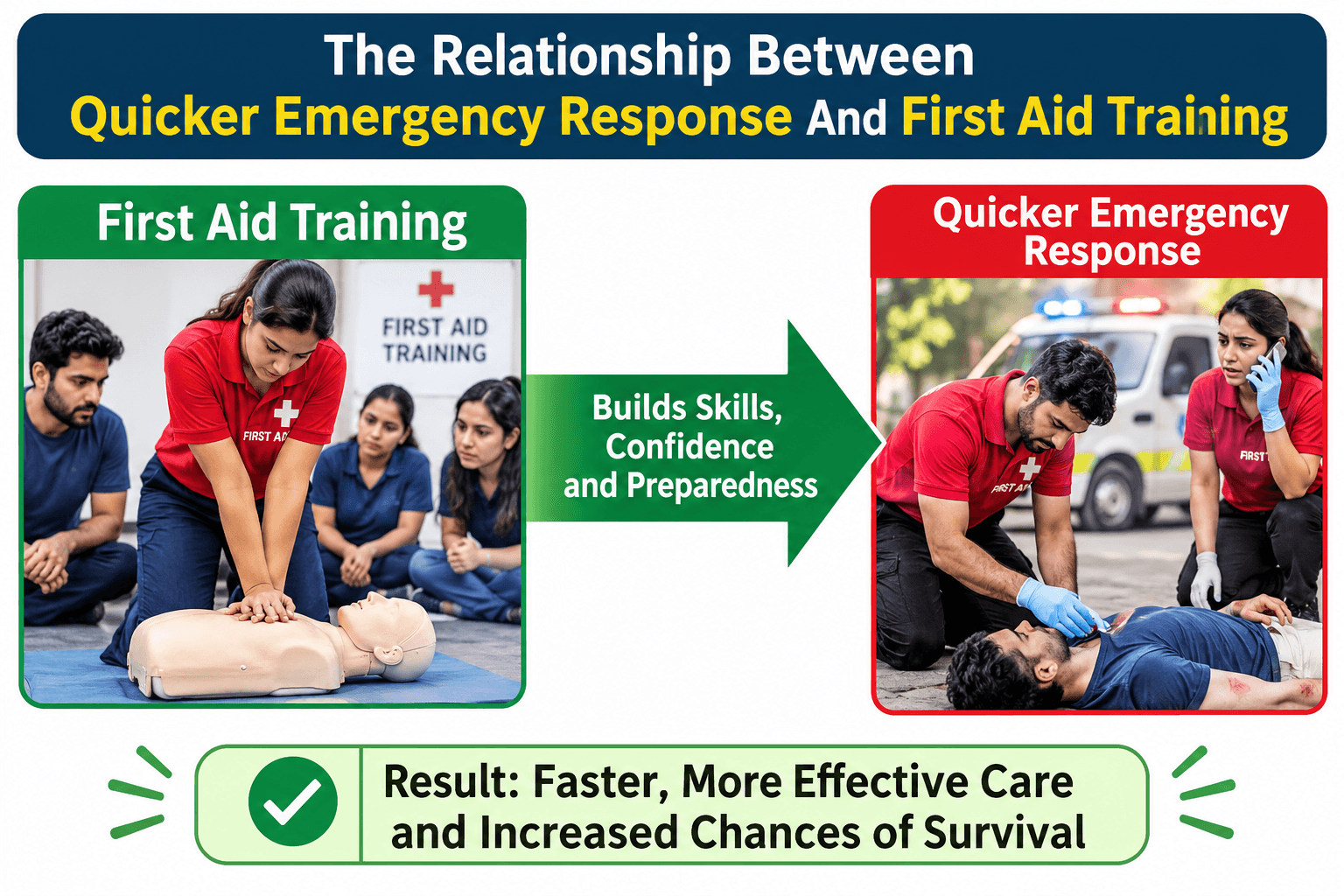
Whether at home, at work, or in public areas, medical crises may occur anywhere. The initial few minutes of these scenarios may have a big impact on how things turn out. Immediate treatment from someone close may help keep a crisis from becoming worse, even if expert medical aid is crucial. Knowledge of first aid becomes useful in this situation. Communities may become safer and more prepared for unforeseen events by learning how to identify crises, react correctly, and provide basic support.
Recognising The Value Of Quick Emergency Action
Every second counts during an accident or medical emergency. Before emergency services arrive, a person who is having serious bleeding, breathing problems, or abrupt unconsciousness may need to be attended to right away.
People who have received first aid training are better able to identify warning signs and prioritise their actions. Trained people can evaluate the situation, call emergency services, and provide the necessary support rather than waiting hopelessly.
For instance, while waiting for an ambulance, someone who knows how to handle severe bleeding might apply direct pressure. In a similar vein, identifying stroke symptoms may promote quicker contact with emergency personnel.
How Training In First Aid Shortens Response Times
Hesitancy is one of the main obstacles in emergency situations. People may be unsure about what to do, particularly if they have never encountered a circumstance like this.
Individuals may acquire useful skills for handling common medical situations by enrolling in first aid training Darwin. Identifying possible risks, evaluating the state of an injured individual, and adhering to the proper emergency protocols are all common components of training.
Participants get a better understanding of the procedures involved in offering help via hands-on demonstrations and supervised activities. When unforeseen circumstances emerge, this preparedness may help people make better judgements and cut down on needless delays.
Early Identification Of Life-Threatening Conditions
Not all medical emergencies are readily apparent. While some problems appear suddenly, others grow gradually. Early detection of symptoms may significantly impact the speed at which a person gets medical care.
Participants in first aid instruction are introduced to typical warning signals of diseases such as severe allergic reactions, heart attacks, strokes, and respiratory problems. For example, identifying speech problems, arm weakness, and facial weakness may help someone recognise a potential stroke and promptly contact emergency services.
Early detection may promote prompt medical response, but it cannot take the place of a professional diagnosis.
CPR’s Place In Emergency Preparedness
One of the most urgent medical situations is cardiac arrest. Immediate cardiopulmonary resuscitation may help sustain circulation when the heart stops pumping blood efficiently until medical aid arrives.
Participants may learn how to do chest compressions, identify cardiac arrest, and get acquainted with automatic external defibrillators by completing a CPR course Darwin. People who get practical CPR training are also better able to comprehend the significance of swiftly contacting emergency services and adhering to emergency dispatchers’ instructions.
As medical guidelines evolve, CPR methods and recommended treatments may change; therefore, regular practice and refresher training are crucial.
Increasing Workplace Safety With First Aid Knowledge
Depending on their activity, workplaces provide a variety of risks. While medical crises like fainting, choking, or rapid cardiac events may occur in offices, construction sites may entail machines and physical trauma.
A Darwin first aid course may help workers have a better grasp of how to handle these situations while still ensuring their own safety. Preparing for workplace first aid also includes finding qualified individuals, developing clear communication protocols, and having emergency supplies on hand.
When workers are aware of their roles in an emergency, there may be less uncertainty and aid may start more quickly.
Developing Self-Belief Via Practical Education
While reading about first aid protocols is helpful, hands-on training has more advantages. Realistic situations are often used in training sessions to motivate participants to apply their knowledge under observation
Through these exercises, people may hone their situational assessment, clear communication, and first aid skills. Being confident does not equate to being careless. Recognising one’s own limits, avoiding needless risks, and obtaining expert support when needed are all important for effective emergency response.
Read More: Apron Belly: Causes, Health Risks, and How to Get Rid of It
Conclusion
Awareness, readiness, and the capacity to respond appropriately are the first steps towards a quicker emergency response. Individuals with first aid training are less reluctant and more equipped to handle emergency situations. These abilities help create safer surroundings by handling injuries, doing CPR, and identifying medical warning signs. More individuals may be equipped to provide significant help during crises by promoting first aid education in homes, businesses, and communities.