Introduction
Industrial and commercial operations produce large volumes of recyclable materials, including cardboard, plastics, paper, textiles, and packaging products. Efficient waste management is no longer just an environmental obligation; it’s an operational necessity. Among the most effective solutions for consolidating recyclables is the vertical baling press. Modern engineering advancements have dramatically enhanced the safety, reliability, and performance of these machines, making them essential tools for warehouses, retail networks, manufacturing plants, and logistics hubs. Facilities using these systems often report significant space savings and streamlined recycling workflows.
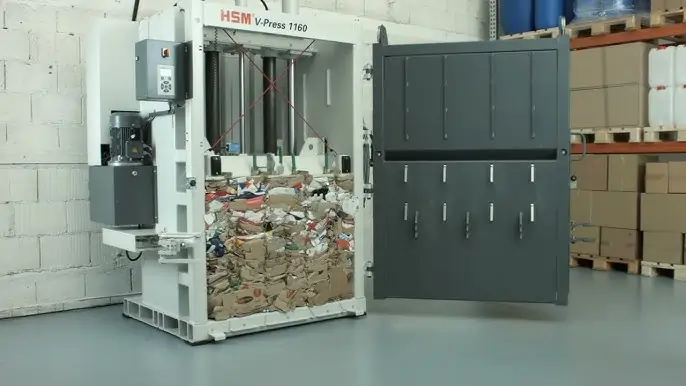
A vertical baling press compresses loose waste into compact, uniform bales. Using hydraulic pressure within a vertical chamber, it significantly reduces the volume of recyclable materials, simplifying storage and transportation. Early systems, however, posed safety risks due to limited guarding, manual bale tying, and inadequate overload protection. Today’s designs address these concerns through advanced safety features and automation, providing safer and more efficient operations.
Evolution of Vertical Baling Press Safety Standards
Workplace safety and regulatory compliance are increasingly central to waste management operations. Modern vertical baling presses now integrate multiple protective mechanisms, such as
-
Interlocked safety doors preventing operation while open
-
Emergency stop buttons for immediate shutdown
-
Pressure relief valves to prevent hydraulic overload
-
Overload detection systems for early hazard identification
Safety interlocks ensure operators are never exposed to moving parts during compression cycles. Pressure sensors continuously monitor hydraulic forces, keeping them within safe operational ranges. These measures significantly reduce the risk of mechanical failure and workplace injury.
Ergonomically designed control panels allow operators to manage baling cycles efficiently without unnecessary physical strain. Intuitive interfaces simplify training and minimize operational errors, supporting safer work environments in warehouses and distribution centers.
There’s plenty more to explore check out our other posts!
Structural Design and Durability Enhancements
The strength and design of a vertical baling press directly influence its safety and longevity. Modern units feature:
-
High-grade steel frames engineered to withstand repetitive compression
-
Reinforced weld joints and corrosion-resistant coatings for long-term durability
-
Precision hydraulic cylinders to ensure consistent pressure
-
Sealed hydraulic systems that prevent leaks, slip hazards, and contamination
By combining robust mechanical structures with reliable hydraulic assemblies, manufacturers have developed machines capable of continuous high-volume operation. Many facilities report reduced maintenance downtime and improved operational efficiency with these durable designs.
Automation and Intelligent Monitoring
Automation has transformed vertical baling operations. Advanced presses incorporate programmable logic controllers (PLCs) to regulate compression cycles precisely. Key features include
-
Real-time monitoring of bale density, hydraulic pressure, and door status
-
Automatic bale ejection systems that reduce manual handling and related injuries
-
Automated tying mechanisms to minimize operator contact with compressed materials
Remote diagnostics and predictive maintenance tools allow managers to identify potential mechanical issues before they escalate. Facilities using these systems often experience lower downtime, enhanced productivity, and reduced risk of accidents due to equipment malfunction.
Integration in Commercial and Industrial Settings
Vertical baling presses are widely deployed across different operational environments:
-
Warehouses and distribution centers compress cardboard and plastic to optimize storage and reduce clutter.
-
Retail backrooms benefit from compact balers that handle daily packaging waste efficiently without occupying excessive floor space.
-
Manufacturing plants utilize heavy-duty units capable of managing diverse industrial waste while maintaining consistent bale density and safe operation.
These systems are scalable and adaptable, making them suitable for both small retail environments and high-volume industrial facilities.
Scrap Press Machine Applications
While vertical balers handle lighter materials such as cardboard and plastics, scrap press machines are designed for metal recycling. They compress metal scrap into dense blocks for easier transport and resale.
In facilities generating both packaging and metal waste, integrating balers and scrap presses allows for streamlined operations. Heavy-duty hydraulic systems in scrap presses can exert significantly higher pressure, safely compacting metals without compromising equipment integrity. The shared hydraulic engineering principles highlight the versatility of these compression systems across multiple recycling applications.
Compliance and Environmental Responsibility
Modern vertical balers meet international safety and environmental standards. Key design features include:
-
Noise reduction mechanisms for quieter operation
-
Energy-efficient hydraulic pumps to lower electricity consumption
By producing standardized bales, facilities can streamline recycling processes, reduce transport frequency, and lower carbon emissions. Effective compaction and waste segregation also support corporate ESG objectives. Some companies report up to a 30% reduction in transport-related emissions after implementing modern baling systems.
Leading Providers of Vertical Baling Press Solutions
Several companies specialize in delivering safe, reliable vertical baling systems:
-
SabTech offers hydraulic compression equipment focused on structural strength, safety, and operational efficiency. Systems include interlocked doors, automated cycles, and durable hydraulic components suitable for warehouses, retail outlets, and manufacturing plants.
-
Bramidan International is a manufacturer emphasizing ergonomic design, energy efficiency, and safety compliance. Their balers are widely used in retail and logistics environments.
-
Orwak develops flexible, modular baling and compaction systems designed to integrate seamlessly into existing waste workflows, enhancing operator safety and reliability.
-
Harmony Enterprises Produces durable, low-maintenance balers for heavy-duty applications in distribution centers and industrial facilities.
-
Marathon Equipment delivers robust vertical balers with reliable hydraulic systems, supporting large-scale recycling operations across multiple sectors.
These providers continuously innovate to enhance operational safety, efficiency, and long-term reliability in industrial and commercial environments.
Maintenance and Operator Training
Even with advanced safety features, proper maintenance and operator training remain critical:
-
Inspect hydraulic hoses, gauges, and safety interlocks regularly
-
Train staff on correct loading procedures, emergency stops, and cleaning protocols
-
Establish standard operating procedures to minimize misuse
Predictive maintenance and scheduled servicing enhance machine reliability and reduce the risk of unexpected breakdowns. Facilities that follow these practices experience smoother operations and fewer workplace incidents.
Want to learn more? Our full collection of posts is ready for you!
Conclusion
Modern vertical baling press designs exemplify the evolution of industrial waste management technology. Reinforced structures, precision hydraulics, and integrated safety mechanisms ensure machines deliver both efficiency and protection.
The complementary use of scrap press technology in metal recycling demonstrates the adaptability of hydraulic compression systems. Companies like SabTech, Bramidan, Orwak, Harmony Enterprises, and Marathon Equipment drive innovation in safe and reliable baling solutions.
Investing in advanced vertical baling presses, combined with comprehensive maintenance and training, enables organizations to create safer workplaces, optimize waste handling, and support sustainable operational growth.
Disclaimer
This article provides general informational and educational content only. While care has been taken to ensure accuracy, the publisher and author make no guarantees regarding completeness, suitability, or timeliness.
Descriptions of vertical baling presses and scrap press machines are based on publicly available industry information and should not be considered technical, engineering, or safety guidance. Always consult qualified professionals, manufacturers, or certified safety specialists before installing, operating, or maintaining industrial machinery.