Introduction
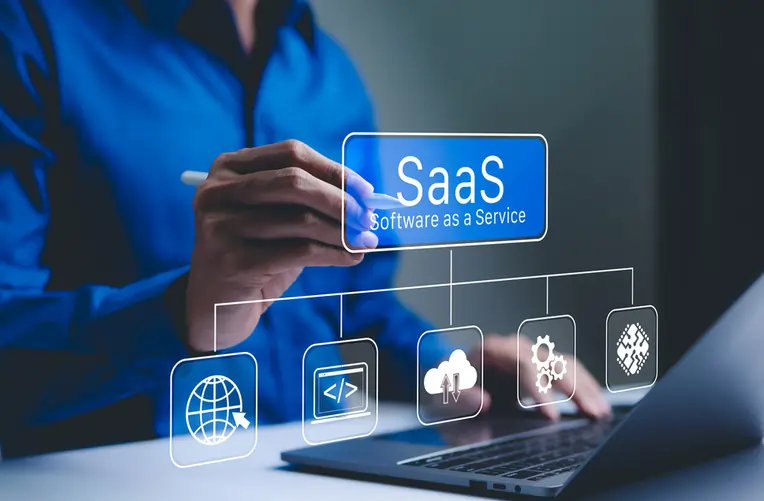
SaaS stands for Software as a Service. It is a cloud computing model that allows users to access applications over the internet instead of installing and maintaining them on local computers or company servers.
Instead of purchasing software once and handling updates manually, SaaS applications are hosted by a service provider and delivered through a web browser usually on a monthly or annual subscription basis.
Today, Software as a Service powers startups, enterprises, freelancers, and remote teams worldwide. From communication platforms to large-scale enterprise systems, the SaaS model has transformed how software is developed, distributed, and consumed.
Table of Contents
ToggleWhat Does SaaS Stand For?
SaaS stands for Software as a Service, a cloud-based software delivery model where applications are hosted by a provider and accessed online through a subscription. Users log in via a browser or app instead of installing software locally.
This guide explains SaaS in simple terms, including how it works, why businesses prefer it, pricing models, security, architecture, and future trends.
What Is Software as a Service (SaaS)?
Software as a Service is a cloud-based software delivery model where a vendor hosts applications on remote infrastructure and makes them accessible to users online.
Instead of downloading software files or installing programs manually, users simply log in through a browser or mobile app and begin working instantly.
SaaS is one of the three main cloud computing models, alongside IaaS (Infrastructure as a Service) and PaaS (Platform as a Service).
There’s plenty more to explore check out our other posts!
Traditional Software vs. SaaS
| Traditional Software | SaaS Software |
| Installed locally | Accessed online |
| One-time purchase | Subscription pricing |
| Manual updates | Automatic updates |
| Requires in-house IT maintenance | Provider manages infrastructure |
| Limited to specific devices | Accessible from anywhere |
In simple terms, SaaS turns software into an on-demand service similar to how streaming platforms replaced physical DVDs.
Key Characteristics of SaaS
SaaS platforms share several core characteristics that differentiate them from traditional desktop applications.
1. Cloud-Based Hosting
Applications run on cloud infrastructure managed by the provider. Customers do not need to purchase servers or maintain complex hardware systems.
2. Subscription Pricing Model
Most SaaS products operate on monthly or annual billing. This allows organizations to:
-
Scale usage up or down
-
Predict operating expenses
-
Avoid large upfront capital investments
3. Automatic Updates and Maintenance
The service provider manages:
-
Software upgrades
-
Security patches
-
Performance optimization
-
Server monitoring and maintenance
Users always access the latest version without manual installation.
4. Anywhere Accessibility
Because SaaS operates online, users can access applications from:
-
Laptops
-
Smartphones
-
Tablets
-
Remote offices
A stable internet connection is usually the only requirement.
5. Multi-Tenant Architecture
Most SaaS platforms use multi-tenant architecture. This means:
-
A single software instance serves multiple customers
-
Each customer’s data remains isolated and secure
-
Infrastructure costs are reduced
-
Scalability improves significantly
This architecture enables providers to support thousands or even millions of users efficiently.
How Does SaaS Work?
Think of Software as a Service as renting a fully managed office instead of building and maintaining one yourself.
Here’s how SaaS typically works:
-
A SaaS provider develops and hosts the application on cloud servers.
-
Users subscribe to the service.
-
Customers log in via a web browser or mobile app.
-
Data is stored securely in the cloud environment.
-
Updates and system maintenance occur automatically in the background.
This structure shifts technical responsibility from the customer to the provider. Businesses can focus on operations while the SaaS vendor manages infrastructure, uptime, and performance.
Popular Examples of SaaS Applications
Many of the tools used daily by individuals and businesses are SaaS products.
Business and Productivity Tools
-
Customer relationship management (CRM) systems
-
Project management platforms
-
Accounting software
-
Communication and collaboration tools
Well-Known SaaS Examples
-
Salesforce CRM and customer management platform
-
Microsoft Office 365 Cloud-based productivity applications
-
Google Workspace Online collaboration tools
-
Slack Team communication platform
These SaaS platforms allow organizations to operate without deploying complex on-premise enterprise software.
SaaS vs. Other Cloud Computing Models
SaaS is part of the broader cloud computing ecosystem. It works alongside two other major service models.
1. IaaS (Infrastructure as a Service)
Provides virtual servers, storage, and networking resources. Businesses manage their own applications and operating systems.
Example use: Hosting custom applications or websites.
2. PaaS (Platform as a Service)
Offers development environments where teams can build and deploy applications without managing the underlying infrastructure.
Example use: Application development platforms.
3. SaaS (Software as a Service)
Delivers ready-to-use applications directly to end users.
Example use: Email services or collaboration tools.
Quick Comparison Table
| Model | What You Manage | Best For |
| IaaS | Applications & OS | Hosting custom systems |
| PaaS | Applications only | App development |
| SaaS | Nothing (provider manages all) | Ready-to-use software |
Benefits of SaaS for Businesses
The rapid growth of SaaS adoption is driven by measurable business advantages.
Reduced IT Complexity
Organizations no longer require large internal teams to install, patch, and maintain software systems.
Lower Upfront Costs
Subscription pricing eliminates:
-
Expensive perpetual licenses
-
Hardware purchases
-
Large infrastructure investments
Faster Deployment
Most SaaS tools are available immediately after signup. There is no installation process or hardware configuration required.
Scalability
Businesses can add or remove users as needed. This flexibility supports startups, growing companies, and large enterprises.
Remote Collaboration
Cloud-based access enables distributed teams to work together in real time across different locations.
Continuous Innovation
SaaS providers release new features and improvements regularly, helping companies remain competitive without disruptive upgrades.
Advantages of SaaS for Individual Users
SaaS is not only beneficial for enterprises. Individuals also gain practical advantages.
Key benefits include:
-
No manual downloads or updates
-
Cross-device synchronization
-
Automatic backups
-
Easy sharing and collaboration
-
Minimal technical knowledge required
Students, freelancers, consultants, and creators rely on SaaS applications for daily productivity and communication.
SaaS Pricing Models Explained
Although subscription billing is standard, SaaS companies use different pricing strategies.
Freemium Model
Basic features are offered for free. Advanced functionality requires a paid subscription.
Tiered Pricing
Different plans provide varying levels of features, usage limits, or support.
Per-User Pricing
Organizations pay based on the number of active users.
Usage-Based Pricing
Charges depend on consumption metrics such as:
-
Storage capacity
-
API calls
-
Bandwidth usage
This flexibility allows customers to choose SaaS pricing models aligned with their operational needs and budgets.
SaaS Architecture: The Technology Behind the Scenes
Most Software as a Service platforms rely on multi-tenant architecture, where multiple customers share the same infrastructure while maintaining strict data isolation.
Key Components of SaaS Architecture
-
Cloud hosting servers
-
Application layer
-
Database management systems
-
Security frameworks
-
APIs for third-party integrations
This architecture enables SaaS providers to:
-
Roll out updates simultaneously
-
Maintain high availability
-
Ensure consistent performance
-
Scale resources dynamically
For enterprise deployments, uptime guarantees, disaster recovery strategies, and performance monitoring are critical evaluation factors.
Security in SaaS Platforms
Security is often a primary concern when storing business data online. Reputable SaaS providers implement strong protection measures.
Common SaaS security practices include:
-
End-to-end data encryption
-
Multi-factor authentication (MFA)
-
Regular security audits
-
Automated backups
-
Industry compliance certifications
Many SaaS platforms meet strict security standards due to their specialized infrastructure management. However, customers also share responsibility for access control and proper data governance.
Challenges and Limitations of SaaS
Despite its advantages, Software as a Service has some limitations.
Internet Dependency
Without a reliable internet connection, access may be limited or slower.
Subscription Costs Over Time
Long-term SaaS subscription expenses may exceed the cost of traditional licenses in certain cases.
Limited Customization
Some SaaS applications offer less flexibility compared to fully self-managed systems.
Data Control Concerns
Organizations must trust providers with sensitive data. Conducting vendor due diligence is important before adoption.
Why SaaS Became So Popular
Several technological and business shifts accelerated SaaS growth:
-
Faster global internet speeds
-
Advancements in cloud infrastructure
-
Remote and hybrid work environments
-
Increased mobile device usage
-
Growing demand for scalable digital tools
Industry research shows that the global SaaS market continues to grow rapidly, with enterprises allocating a significant portion of their IT budgets to cloud-based software solutions.
Many organizations prefer operational expenses (OPEX) through subscriptions instead of large capital expenditures (CAPEX) for infrastructure.
SaaS and the Future of Software
The Software as a Service model continues evolving alongside emerging technologies.
AI Integration
Artificial intelligence enhances SaaS platforms through:
-
Workflow automation
-
Data analytics
-
Personalization
-
Predictive insights
Vertical SaaS
Industry-specific SaaS solutions tailored for healthcare, education, finance, and e-commerce are expanding steadily.
Low-Code and No-Code Tools
These platforms allow users to build applications with minimal programming knowledge.
Increased Automation
Workflow automation reduces repetitive tasks across departments and improves operational efficiency.
Cloud-delivered software is expected to remain a dominant method of software delivery in the coming years.
Common SaaS Use Cases Across Industries
SaaS solutions support nearly every major industry.
-
Marketing: Email automation and analytics platforms
-
Finance: Cloud-based accounting systems
-
Education: Online learning platforms
-
Healthcare: Patient management software
-
Retail: Inventory management and e-commerce systems
This adaptability explains why SaaS adoption continues to grow globally.
Who Should Use SaaS?
Software as a Service is ideal for:
-
Startups that need fast deployment
-
Small businesses with limited IT resources
-
Enterprises managing global teams
-
Remote-first organizations
-
Companies seeking operational flexibility
SaaS provides scalable solutions for businesses of all sizes.
Want to learn more? Our full collection of posts is ready for you!
Final Thoughts: Understanding SaaS in Today’s Digital World
Software as a Service has fundamentally changed how organizations and individuals use technology. Instead of installing and maintaining complex systems, users access powerful applications instantly through the cloud.
By combining accessibility, scalability, automatic updates, and subscription-based pricing, SaaS removes traditional barriers to software adoption. Businesses gain flexibility, individuals enjoy convenience, and developers can innovate faster.
As cloud computing continues to mature, SaaS has become the standard model for delivering and experiencing software in the modern digital economy.
Frequently Asked Questions (FAQs)
Is SaaS the same as cloud computing?
No. SaaS is a category within cloud computing. Cloud computing includes IaaS, PaaS, and SaaS. SaaS specifically refers to ready-to-use software delivered online.
Is Netflix a SaaS product?
Netflix operates on a subscription model but is categorized as a streaming service rather than traditional business SaaS software.
What is B2B SaaS?
B2B SaaS refers to Software as a Service products sold to businesses instead of individual consumers. Examples include CRM systems, HR platforms, and accounting software.
How does SaaS pricing work?
SaaS pricing typically follows monthly or annual subscriptions. Pricing structures may include freemium, tiered, per-user, or usage-based models.
What is the difference between SaaS and traditional software?
Traditional software is installed locally and often purchased once. SaaS is accessed online and billed as a recurring subscription.