
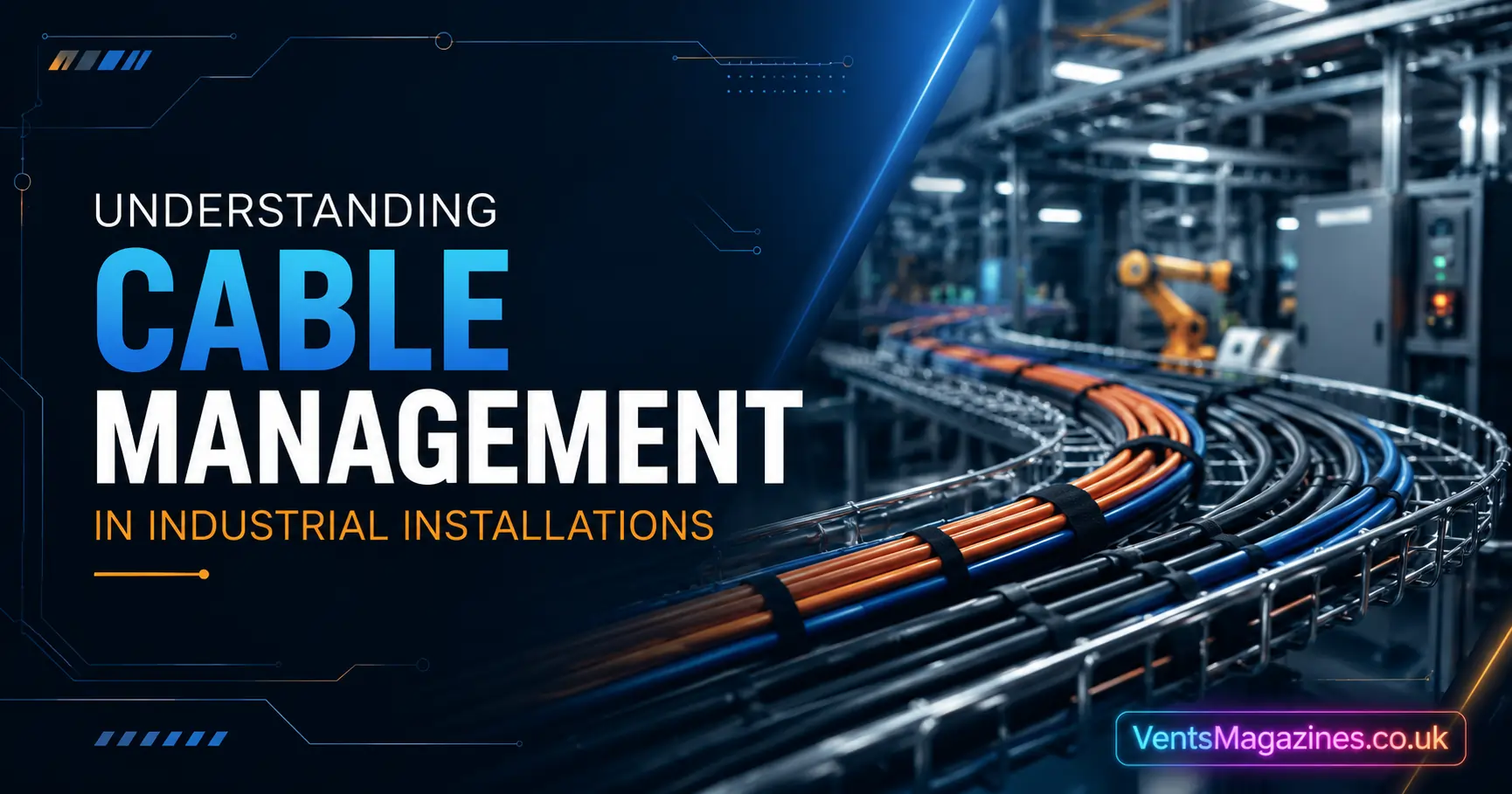
The term “cable management”, in isolation, might not conjure in most people’s minds the idea of a greatly important or complex discipline, other than the seemingly common-sense practice of just “keeping wires tidy”.
When it comes to industrial contexts, however, responsible and effective cable management amounts to so much more than this.
After all, in industrial environments, there is a critical need to maintain efficient and reliable production lines. The achievement of this depends on continuous power, precise data transmission, and automated control gear.
With the cables and wires that are used in industrial settings being subject to constant and heavy demands, it is critical for the right cable management strategies to be implemented from the outset.
A Quick Introduction to Cable Management
Cable management can be defined as the process of organising, routing, protecting, and securing electrical and data cables within a workplace, computer, or industrial setup. This is typically done with the aim of improving safety, efficiency, and aesthetics.
It is, of course, crucial in any setup to have the right products in the first place. But even once an organisation has sourced the most appropriate cables and wires from RS Online or another reputable supplier for use in its intended installation, its personnel will still have a lot more to do.
Specifically, there will be a need to ensure the given cables continue to be protected, identifiable, accessible, and compliant with applicable national and international electrical standards throughout their operational life. This is what a well-conceived and honed cable management approach can greatly help achieve.
Why Does Cable Management Matter So Much in Industrial Settings?
Industrial environments expose cables and wires to all manner of harsh conditions. Such phenomena as vibration, mechanical stress, chemicals, dust, moisture, and extremes in temperature underscore the importance of effective cable management.
An organisation that organises its cables and wires well, however, can expect to reap the following benefits:
-
Greater Safety
Cables that are loose or damaged can create significant hazards in industrial workplaces. It can be easy for staff members to trip over trailing cables, while exposed wiring may lead to electrical faults, overheating, or even fire. Proper cable routing and containment systems can help lessen these risks.
-
Enhanced Reliability
Industrial operations depend on continuous uptime. If cables at an industrial site are effectively managed, it is less likely that such problems as abrasion, crushing, or accidental disconnection will occur. This, in turn, helps minimise unplanned downtime and reduce maintenance costs.
-
Easier Maintenance and Troubleshooting
Inevitably, maintenance teams will sometimes be called upon to identify faults at an industrial premises, and to undertake repairs and upgrades. In such cases, their work can be more straightforward if wiring systems are already clearly labelled and organised.
-
Assurance Of Compliance
In the UK, for instance, strong cable management helps ensure compliance with the BS 7671 standard, otherwise known as the IET Wiring Regulations. This covers such aspects as protection against thermal effects, segregation of circuits, and support of wiring systems so that they are not liable to premature collapse in the event of fire.
Key Components of Cable Management Systems
Several protective and organisational products are typically combined in industrial cable management systems. These include such items as:
-
Cable Trays
Cable trays provide open support systems for the routing of large volumes of cable. They see frequent use in settings where accessibility is important, such as factories, plant rooms, and commercial buildings.
-
Cable Trunking
In some environments, there is a need for cables to be given a further layer of protection from dust, moisture, or accidental contact. This is where cable trunking often proves invaluable, given how it encloses cables within protective channels.
-
Conduit Systems
Conduit can be important for protecting cables from environmental exposure and mechanical damage. When it comes to certain applications, metallic conduit can also provide additional electromagnetic compatibility (EMC) shielding.
-
Cable Glands And Grommets
Alongside the maintenance of environmental sealing, cable glands secure cable entry points into panels and enclosures. Grommets, meanwhile, prevent cables from sustaining abrasion when they pass through metal cut-outs or panels.
-
Cable Ties and Fixings
For the maintenance of organised cable runs and the prevention of strain on connections, the likes of cable ties, clamps, and mounting systems can all play useful roles. Many industrial-grade fixings are designed to cope strongly with ultraviolet (UV) exposure, chemicals, and fluctuations in temperature.
Read More: Internet Chicks Review 2026
Cable Management Is About So Much More Than ‘Tidiness’
The proactive, responsible, and savvy management of cables in an industrial installation will go a long way to ensuring the highest standards of safety, operational reliability, and long-term maintenance efficiency.
By selecting appropriate cables, wires, and related products, and designing their systems in line with best practices, facilities can minimise risks and maximise uptime.